
Hyper Realistic Shading
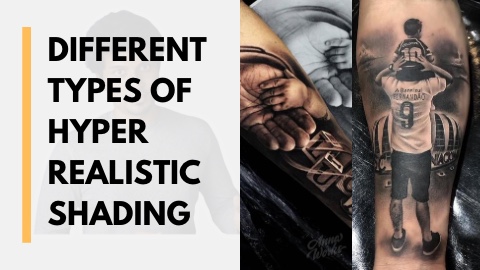
Hyper-realistic shading in tattooing aims to replicate the appearance of light, shadow, and depth with extreme precision, often resulting in a tattoo that closely resembles a photograph or a realistic image. Achieving hyper-realistic shading involves several key techniques:
1. Understanding Light and Shadow:
Light Source: Understanding the direction and intensity of light is crucial. It determines where highlights and shadows fall on the subject.
Gradation: Smooth transitions from light to shadow are essential. Artists use various needle groupings and techniques to create seamless gradients.
2. Needle Selection and Technique:
Fine Needles: Hyper-realistic shading often requires the use of very fine needle groupings to achieve intricate details and smooth shading.
Layering and Stippling: Building up layers of ink and using stippling techniques (small dots) can simulate textures and create subtle variations in shading.
3. Ink Dilution and Consistency:
Ink Dilution: Adjusting the ink’s consistency by diluting it with water or specialized solutions helps achieve different shades and smoother transitions.
Layering Ink: Layering different shades of ink gradually builds depth and realism, mimicking the complexity of light and shadow.
4. Skin Understanding:
- Skin Tone Adaptation: Working with the natural tones and texture of the client’s skin is crucial. Skin reacts differently to ink, and understanding how it holds pigment is essential for achieving the desired effect.
5. Patience and Precision:
- Slow and Steady Approach: Hyper-realistic shading requires patience and a meticulous approach. Small, deliberate movements and careful attention to detail are key.
6. Reference and Practice:
Reference Images: Having high-quality reference images is essential for accurately replicating details, textures, and shading.
Continuous Practice: Like any art form, mastering hyper-realistic shading takes practice and continuous refinement of techniques.
Challenges:
Skill Mastery: Achieving hyper-realistic shading demands a high level of skill, patience, and understanding of light and form.
Aging and Longevity: Over time, even well-executed hyper-realistic tattoos may fade or lose some detail, so managing client expectations is important.
Creating hyper-realistic shading requires a blend of artistic skill, technical expertise, and a deep understanding of light and form. It’s a challenging but rewarding endeavor for tattoo artists aiming to create astonishingly realistic tattoos.